

The Toddville Mansion: How a Murder Made a $2M Property Worthless Until They Tore It Down

The House That Couldn't Be Sold.
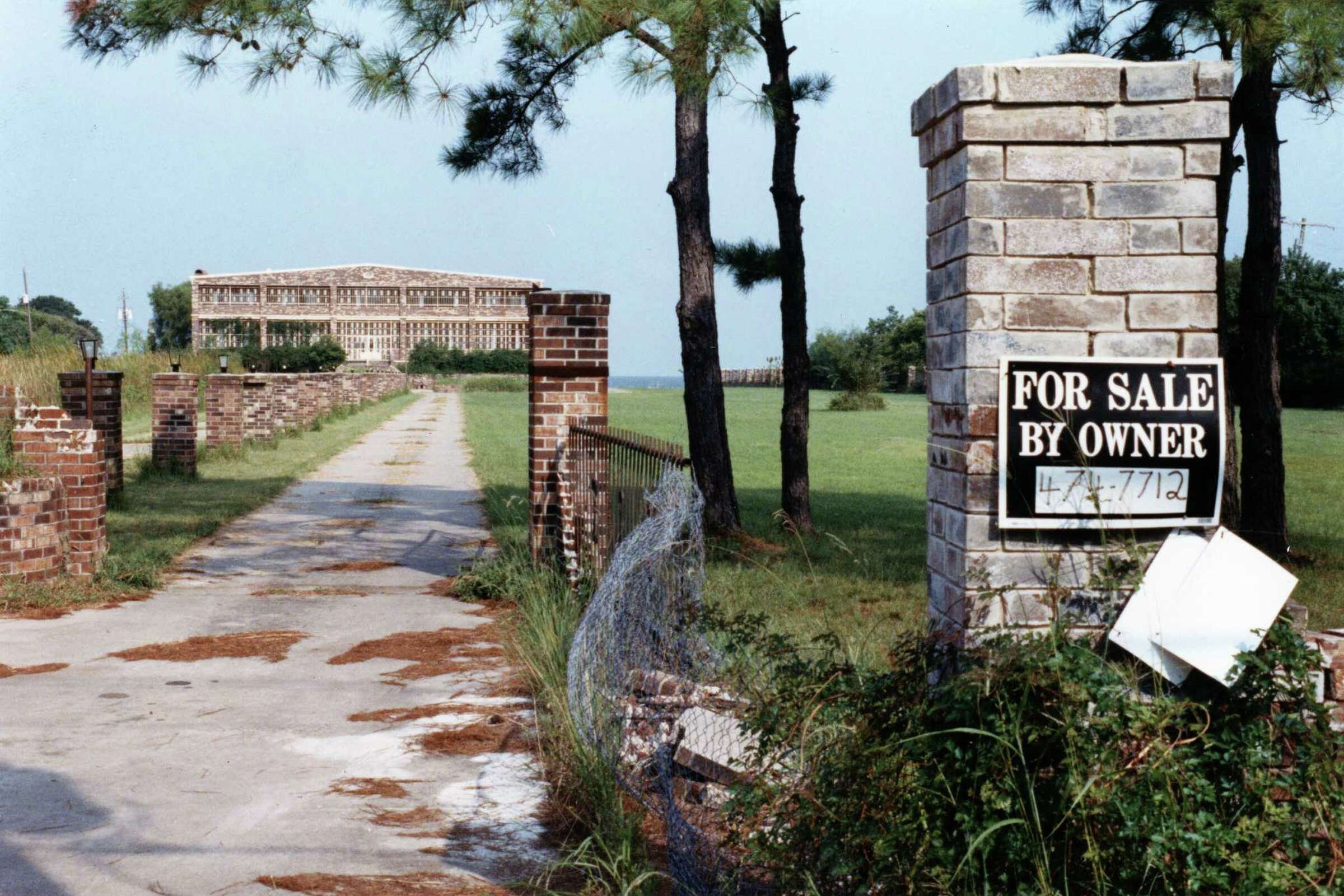
I walked through the Toddville Mansion in high school. Allegedly. The kind of allegedly that every Houston kid who grew up near Seabrook and Clear Lake uses when they talk about that property because nobody was supposed to be in there and everyone was anyway. It was exactly as unsettling as you would expect a 34,000 square foot abandoned steel-framed mansion on Galveston Bay to be at night with a flashlight and a group of teenagers who were significantly braver in the parking lot than they were once they got inside.
The house was remarkable even in ruin. 175 tons of steel framing. Three stories. Two wings connected by a catwalk at the second level. An atrium in the center with a 40-foot swimming pool at the bottom of it. A ballroom. A dining room built for a man who clearly intended to be remembered. William List built it on 4.5 acres backing up to the bay on Toddville Road in Seabrook and it became known simply as the Toddville Mansion, one of those Houston properties that accumulates mythology the way old buildings accumulate moisture. Slowly, thoroughly, and in ways that are very hard to reverse.
Bill List was murdered inside the home by the young men living with him who had grown tired of his mistreatment. Elbert Ervin Homan pulled the trigger, pleaded guilty, and received 45 years. The house sat after that. Nobody bought it. Nobody developed it. Nobody wanted to be the person who tried to turn a murder mansion on Galveston Bay into something a family would choose to live in. The story had gotten into the walls and it would not come out.
This is the part of real estate that the spreadsheet cannot capture. A property's history is not a line item in a pro forma but it is absolutely a factor in what that property is worth and what it can become. The Toddville Mansion was structurally extraordinary. 175 tons of steel does not rot. The location on the bay was genuinely valuable. The square footage was irreplaceable at any reasonable construction cost. On paper the bones of that asset were exceptional.
But paper does not account for what people feel when they pull up to a property and know what happened there. It does not account for what a realtor has to say when a buyer asks about the history. It does not account for the fact that in a market where buyers have choices they will almost always choose the property that does not come with a story they have to decide whether they can live with.
The mansion sat until it became unsalvageable. Not structurally, physically. Years of abandonment, weather, and the particular entropy that descends on a property when nobody cares enough to maintain it eventually finished what the story started. They demolished it in the mid to late 1990s. Subdivided the 4.5 acres into 18 lots. Built 13 homes ranging from $1.6 to $2 million dollars.
The land was always worth what the land was worth. The bay frontage did not care about Bill List. The acreage did not carry the story the way the structure did. Once the building came down the history went with it and the dirt became something a developer could work with and a buyer could consider without the weight of what had happened inside those steel walls.
That is the lesson that the Toddville Mansion teaches anyone paying attention. The asset and the story attached to it are not the same thing. Sometimes the most valuable decision a developer can make is to remove the thing that is carrying the story and start over with what remains. The land. The location. The opportunity that was always there underneath the mythology.
Thirteen homes at $1.6 to $2 million on Galveston Bay. Not bad for a lot that spent a decade being too haunted to sell.
I allegedly had a look at it before it came down. It was worth seeing. So was what they built after.
If you want to talk about what a property's history means for its development potential and how to evaluate assets that come with complications, the honest version of that conversation is at calendly.com/jeph-reit.