
Something doesn't feel right.
Trust that instinct.
Most contractor problems don't announce themselves. They show up as slow progress, vague answers, and invoices that don't match the work on site. By the time it's obvious, the money is already gone.
Not sure yet? Keep reading.
The most survivable problems in real estate are bad loan terms, off ARVs, and slow markets. The one that kills deals — the one investors rarely come back from, is a contractor who's burned through the draws and delivered thirty cents of work on every dollar.
If you're seeing any of these, call now, not later.
Waiting to see how it plays out is how small problems become deal-killers.
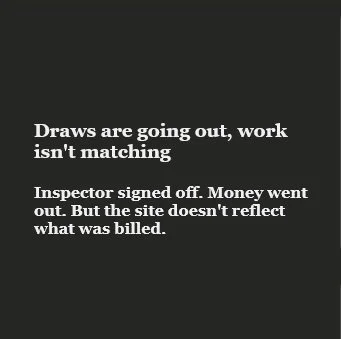
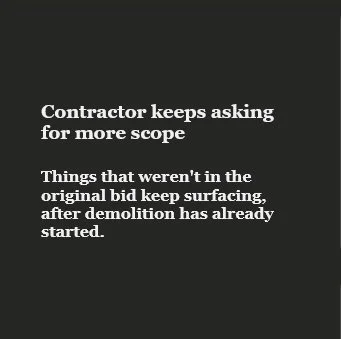
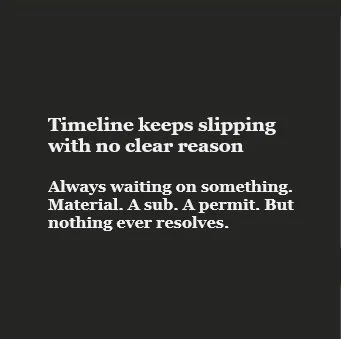
You're getting answers, but they don't add up
The contractor has an explanation for everything. None of it quite makes sense.
How this actually happens, from the field
The draw inspection problem, a pattern Jeph has seen a hundred times
The inspector and the GC have a relationship. You don't know about it.
It's not a conspiracy. It's just how the system works. The GC and the draw inspector see each other on every job. The GC says he'll be done tomorrow, waiting on this, waiting on that. The inspector signs off. The draw goes out. The borrower hands over the money because that's what you do when the inspector says it's done.
Except seventy percent of the draw is spent and thirty percent of the work is done. And by the time that's visible, walking away isn't realistic anymore.
The lender isn't protecting you the way you think they are. Sometimes they'll issue the draw directly to you. The advice: don't hand it over until you've seen the work with your own eyes. Video. Photos. Someone on site who works for you, and nobody else.
Why it starts before the first nail goes in
Most contractor disputes are really clarity problems in disguise.
When scope isn't defined tightly upfront, who does what, by when, for exactly how much, contractors fill in the gaps in their favor. Not always intentionally. But the ambiguity always costs the investor. Change orders come later. Budget blows. Timeline shifts. And now you're negotiating from a weak position mid-project instead of a strong one before anything started.
The fix isn't finding better contractors. It's removing the ambiguity before they show up. That's what I help investors do, before the project starts, or when it's already in trouble and someone needs to step in with authority.
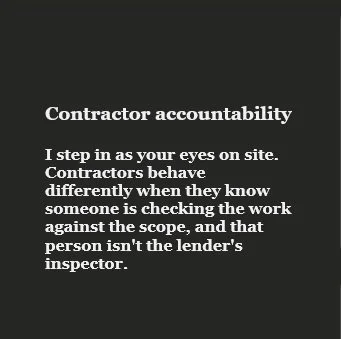
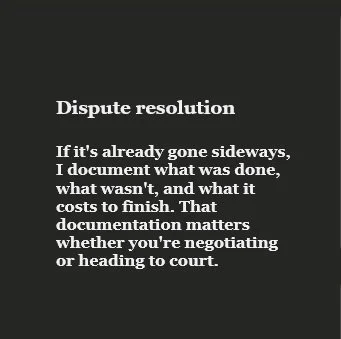
How I help when you're already in it
Depending on where the project is, this looks like one or more of the following:
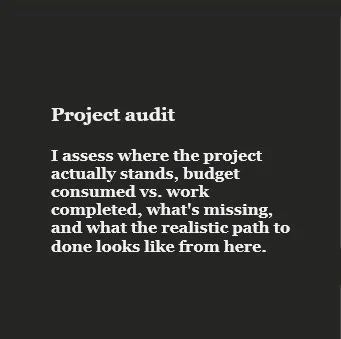
"He isn't going to always tell you what you want to hear, but he will tell you what you need to hear to move forward."
— Thomas D. Day, Realtor
"Jeph has a wealth of real estate consulting experience and has proven to be very adept in a variety of real estate situations. His greatest quality is being a straight shooter, he really does have his clients' interests above all else, and that's really rare to come by."
— Anthony T., Investor / Entrepreneur
The longer you wait,
the more it costs to fix.
If something feels off, it usually is. A 15-minute call costs you nothing. Tell me where the project stands and I'll tell you whether what you're seeing is normal friction or a real problem, and what to do about it either way.
Whether your contractor is actually on track
What your draw situation should look like
How to document what's already happened
Whether you need to step in now or hold
No pitch. No obligation. Just a straight answer.