

The Consumer Didn’t Disappear; Spending Just Concentrated
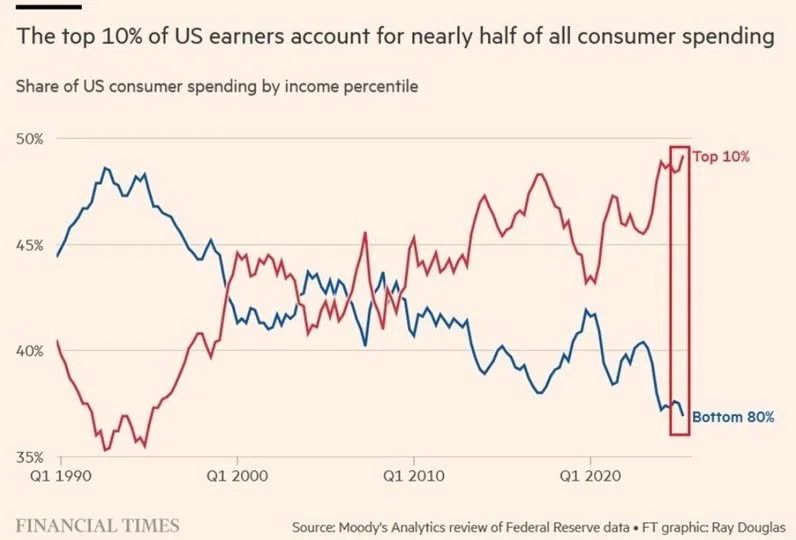
Everyone keeps asking, “Where did the consumer go?”
They didn’t disappear. They just stopped being evenly distributed.
This chart ruins a lot of comfortable business myths.
Nearly half of all consumer spending comes from the top 10%. Meanwhile, the bottom 80% is being told they’re the “engine of the economy” while juggling higher rent, higher debt, higher insurance, and less room to breathe. But sure, let’s keep designing businesses that require them to spend freely and consistently. What could go wrong?
If you’re building offers for the “average consumer,” I have bad news: that person is exhausted, cautious, and one surprise bill away from not buying anything at all. That’s not a moral judgment, it’s math.
The top 10% doesn’t shop like everyone else. They don’t ask, “Is this the cheapest option?” They ask, “Will this work, and how much time does it save me?” They pay to reduce friction, eliminate uncertainty, and avoid learning curves they don’t want.
Here is the “Pearl” nobody wants to dive for:
If your business depends on volume, urgency, discounts, or constant follow-up, you’re not selling to spenders, you’re selling to strugglers.
This isn’t about luxury brands or fancy logos. It’s about clarity, competence, and positioning. Fewer clients. Higher standards. Cleaner execution. Clear outcomes.
Markets don’t crash evenly. They concentrate quietly while everyone argues on social media.
I’m not saying this to be edgy.
I’m saying it because the data already moved on, and a lot of business models didn’t.
But keep in mind, big spenders have big expectations. Make sure you can fill them before you sell them.